
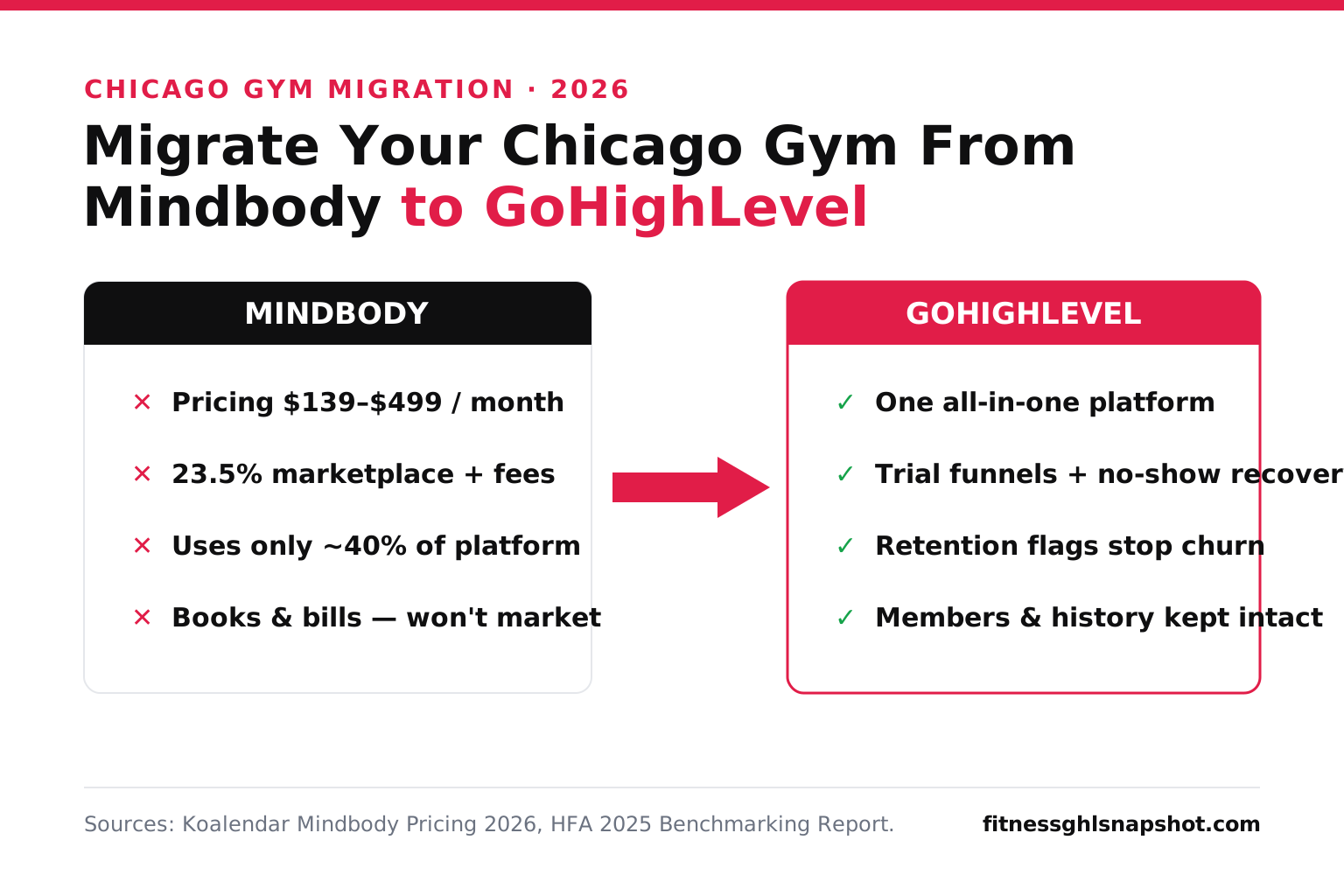
Migrating a Chicago gym from Mindbody to GoHighLevel means exporting your members, memberships, class history, and billing out of Mindbody, mapping that data to a clean GoHighLevel structure, rebuilding your automations (trial follow-up, no-show recovery, retention), and running both systems in parallel for a few days before you cut over — so nothing and nobody gets left behind. Done right, the whole move takes about 2–5 weeks depending on data volume (Fitness Snapshot — GHL Development), and your front desk never sees downtime. Done wrong, you lose member records, break billing, and spend three weekends fighting CSV exports at 11 p.m.
I spent eight years on the floor and front desk of a fast-growing box before I moved into building GoHighLevel systems for gyms full time, and “how do I get off Mindbody without blowing up my membership base?” is one of the questions I hear most from Chicago operators — a market with 461 gyms across the city alone (ByteScraper Chicago gym database). This is the exact playbook, step by step, plus the honest read on when to DIY it and when to hand it to someone who migrates gyms for a living.
Table of contents
- The short answer for Chicago gym owners
- Why Chicago gyms are leaving Mindbody
- Before you migrate: the readiness check
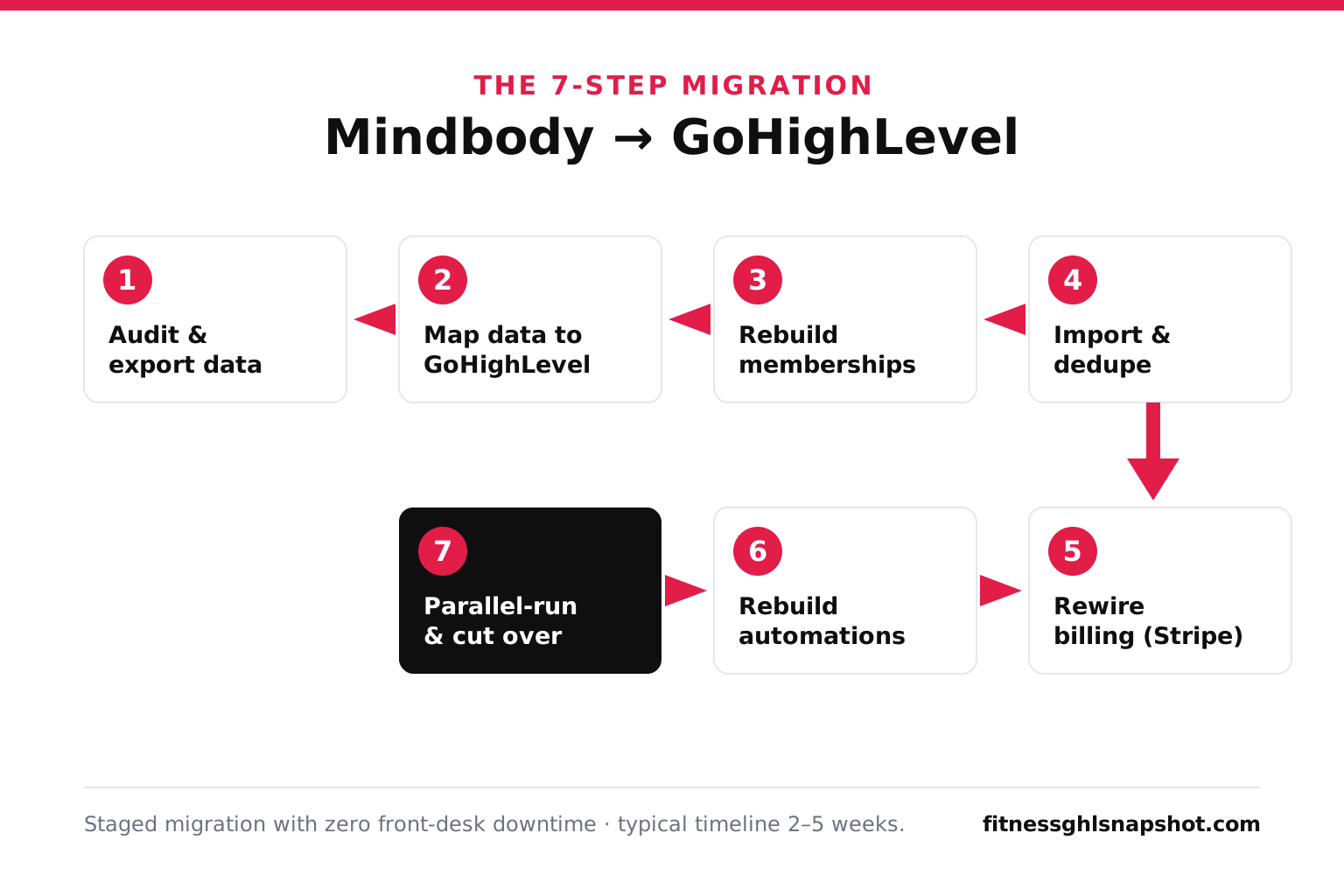
- The 7-step Mindbody → GoHighLevel migration
- How long a migration takes and what it costs
- DIY vs done-for-you migration
- FAQ
The short answer for Chicago gym owners
Whether you run a CrossFit box in Logan Square, a reformer studio in the West Loop, a martial-arts academy in Lincoln Park, or a PT business out of a Wicker Park storefront, the compressed verdict is this:
- Don’t “start fresh.” Your Mindbody account holds years of member records, billing relationships, and class history. The goal of a migration is to bring that across intact — not to abandon it and rebuild from a blank contact list.
- Sequence beats speed. The gyms that get burned rush the cutover. The ones that migrate cleanly export first, rebuild the structure, import into a staging pipeline, and only flip billing once the data checks out.
- The automations are the point. You’re not switching platforms to get another calendar. You’re switching so trial follow-up, no-show recovery, and retention nudges that stop silent churn run automatically — which Mindbody largely can’t do for you.
The rest of this article is the how, in order, with the numbers.
Why Chicago gyms are leaving Mindbody
I’m not anti-Mindbody — it’s a capable booking platform, and if it’s working for you, stay. But three specific frustrations push operators to move, and I hear all three from Chicago owners weekly. (I’ve written the longer version of this in Why Mindbody Feels Broken in 2026; here’s the short list.)
1. Cost and pricing opacity. Mindbody’s plans run roughly $139/month (Starter) to $499/month (Ultimate), and as of 2026 every quote goes through a sales conversation instead of a published price. If your members book through its consumer marketplace, that adds a 20% commission on top of ~3.5% payment processing — about 23.5% per transaction (Koalendar — Mindbody Pricing 2026). For a busy studio, that’s real money leaking every month.
2. Paying for features you don’t use. Many owners report using only about 40% of what Mindbody offers (Koalendar) — you’re carrying enterprise complexity to run a two-room studio.
3. It doesn’t market for you. Mindbody books and bills. It won’t chase a trial lead in the first five minutes, text a no-show to rebook, or run a win-back to a lapsed member. That gap is expensive: replying to a lead within 5 minutes makes you up to 21× more likely to qualify it than waiting 30 (MIT / InsideSales study).
GoHighLevel solves the third problem natively and the first two by consolidation: it replaces the 5–10 separate tools — CRM, funnel builder, email/SMS, calendar, reputation, chat — that gyms otherwise pay $400–$800+/month for on top of their booking software (GoHighLevel review, 2026).
Approximate published monthly software cost: Mindbody’s three tiers versus GoHighLevel’s all-in-one Unlimited plan, which folds CRM, funnels, email/SMS, calendar, and reputation into one bill. Sources: Koalendar — Mindbody Pricing 2026 and GoHighLevel review, 2026. Marketplace and processing fees are additional on Mindbody.
Before you migrate: the readiness check
Don’t touch an export button until you can answer these four questions. This is the difference between a two-week migration and a two-month cleanup.
- What data actually matters? At minimum: active members, membership tiers/prices, contact details, class/appointment history, outstanding balances, and any tags you use to segment. Decide what’s worth bringing and what’s dead weight.
- What’s your billing plan? Payments are the highest-risk part. You’ll re-establish subscriptions in GoHighLevel (via Stripe) — decide whether you re-authorize cards, migrate tokens, or move members over at renewal. Never let a member get double-charged or missed.
- Who owns the cutover? One person holds the checklist and calls “go.” On a solo migration that’s you; on a done-for-you build it’s the project lead.
- What’s your rollback? Keep Mindbody live and read-only until GoHighLevel is verified. You never delete the old system on day one.
The 7-step Mindbody → GoHighLevel migration
Here’s the sequence I use for every gym migration, front-desk-proof and staged so nothing breaks in production.
Step 1 — Audit and export your Mindbody data
Pull everything out of Mindbody as CSV: the client list, membership/pricing options, sales and outstanding balances, and visit/class history. Note your custom fields and how you use them. This is your source of truth and your archive (see the rule above).
Step 2 — Map your data model to GoHighLevel
Mindbody and GoHighLevel think differently. Mindbody is class-and-booking-centric; GoHighLevel is contact-and-pipeline-centric. Before importing, map every Mindbody field to a GoHighLevel home: clients → contacts, membership tier → a custom field + pipeline stage, trial status → a tag, class history → notes or a custom object. Get this map right on paper first — every later step depends on it.
Step 3 — Rebuild your membership and class structure
Recreate your membership tiers, intro offers, and calendars in GoHighLevel. Build the lead-to-member pipeline (New Lead → Trial Booked → Showed → Joined → Active → At-Risk → Won-Back) that Mindbody never gave you. This is where GoHighLevel starts earning its keep — the structure is built for converting trials into members, not just booking them.
Step 4 — Import contacts, memberships, and history (deduped)
Import the CSVs into GoHighLevel, mapped to the fields from Step 2. Deduplicate aggressively — the same member often exists two or three times in a years-old Mindbody account. Tag every imported contact by status (active, lapsed, trial) so your automations can target them correctly from day one.
Step 5 — Rewire payments and billing
The riskiest step, so go slow. Connect Stripe to GoHighLevel and re-establish active subscriptions. For most gyms the cleanest path is to migrate members to GoHighLevel billing at their next renewal date rather than all at once, so no one is double-billed or dropped. While you’re here, build a failed-payment (dunning) recovery sequence — the automated retries and card-update texts that quietly save revenue Mindbody let slip.
Step 6 — Rebuild the automations that actually make you money
This is the whole reason you’re switching. Build the workflows Mindbody couldn’t:
- Speed-to-lead + trial funnel — instant text/email the second a lead comes in, then a multi-day nurture to book the first class.
- No-show recovery — automatic rebooking texts when a trial or class is missed.
- Onboarding — the first-30-days sequence that decides 12-month retention.
- Retention nudges + churn flags — catch at-risk members before they ghost.
- Review requests — turn happy members into 5-star Google reviews on autopilot.
If you’d rather not build all of this from a blank account, our fitness snapshot ships these eleven automations pre-built, so the migration drops your data into a system that’s already wired.
Step 7 — Parallel-run, verify, then cut over
Run GoHighLevel and Mindbody side by side for a few days. Send test leads through the funnel. Verify a real payment processes. Spot-check 20–30 member records against your archive. Only when the data and billing check out do you route new bookings to GoHighLevel, announce it to members, and set Mindbody to read-only. Keep the archive for 90 days. That’s a clean cutover with zero downtime.
How long a migration takes and what it costs
Two honest questions every operator asks. Timeline scales with data volume — a solo studio with a few hundred members is quick; a multi-location box with years of history takes longer.
Approximate full Mindbody → GoHighLevel migration timeline in weeks, by member/data volume, when staged with a parallel-run cutover. Source: Fitness Snapshot — GHL Development scoping.
On cost: a self-managed migration is “free” in dollars but expensive in your hours and risk. A done-for-you migration is scoped up front with a fixed timeline and price — we bring contacts, membership tiers, class history, balances, tags, and pipelines across, deduped and mapped to a clean GoHighLevel structure, typically with zero downtime (GHL Development). Ongoing, you can keep it running yourself, put it on an hourly retainer or a GHL VA with dev support, or pair it with the snapshot.
DIY vs done-for-you migration
Can you migrate off Mindbody yourself? Yes — if you’re technical, patient, and can afford to have the person who runs the gym heads-down in CSVs for a few weeks. Here’s the honest side-by-side.
Migrating off Mindbody: DIY vs done-for-you
| Plan | DIY Migration | Done-For-You Migration recommended |
|---|---|---|
| Price | Your time | Fixed quote |
| Feature 1 | Free in dollars, costly in hours | Members, tiers, history & balances mapped |
| Feature 2 | You learn GHL data mapping as you go | Deduped and QA'd against your archive |
| Feature 3 | Dedup & billing done by hand (risky) | Billing re-established in Stripe safely |
| Feature 4 | Automations built from scratch | Trial, no-show & retention flows built |
| Feature 5 | You own the cutover and rollback | Parallel-run cutover, zero downtime |
| Feature 6 | Timeline: however long you have | Timeline: ~2–5 weeks, fixed scope |
| — | Get a migration quote |
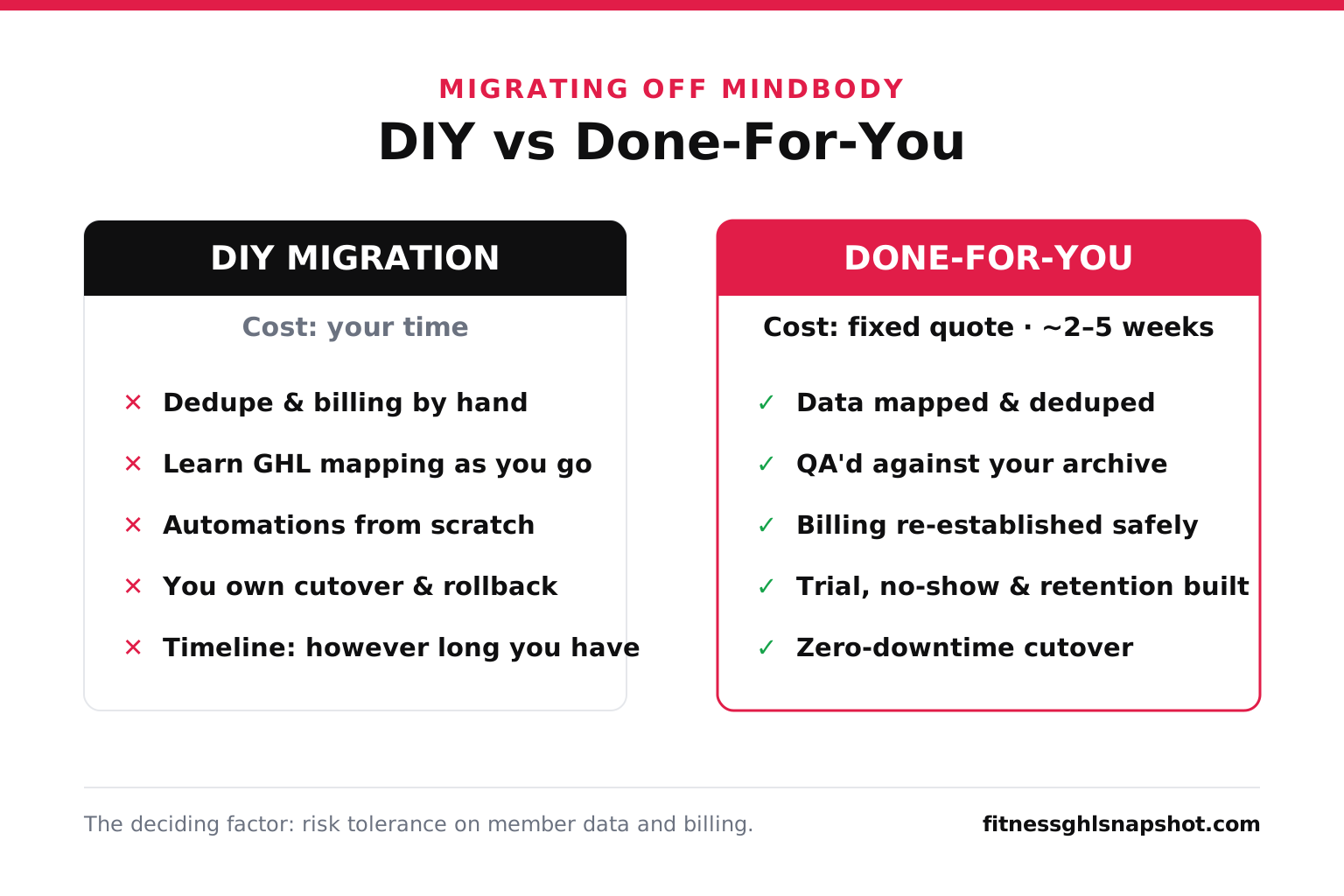
The deciding factor isn’t budget — it’s risk tolerance on two things: member data and billing. Lose a chunk of contacts or double-charge members during a DIY cutover and the migration costs you far more than a done-for-you build ever would. Average gym retention is already only 66.4% (HFA 2025); a botched switch is a fast way to make that worse.
The bottom line
Migrating a Chicago gym from Mindbody to GoHighLevel isn’t a risky leap — it’s a sequenced project: export and archive, map, rebuild memberships, import deduped data, rewire billing carefully, build the automations that actually convert and retain, then parallel-run and cut over. Follow that order and you keep every member, every dollar of billing, and years of history — and you land in a platform that markets for you instead of just booking classes.
Do it yourself if you have the time and the stomach for the billing step. Hand it to a team that migrates gyms for a living if you’d rather keep coaching and selling while your data moves cleanly in the background. Either way, the endpoint is the same: one system that captures trials, recovers no-shows, and catches churn — the whole reason to leave Mindbody in the first place.
Frequently asked questions
Can I migrate my gym from Mindbody to GoHighLevel without losing member data?
Yes — that's the entire point of doing it as a staged migration rather than a fresh start. You export a full archive of your Mindbody data (contacts, memberships, class history, balances) first, map every field to GoHighLevel, import deduped into a staging pipeline, then verify records against your archive before cutting over. Keeping Mindbody live and read-only during the parallel-run gives you a rollback. Done this way, no member records are lost.
How long does a Mindbody to GoHighLevel migration take?
About 2–5 weeks depending on data volume. A small studio with under 500 members is typically around 2 weeks; a mid-size studio (500–1,500) about 3 weeks; a multi-location operator with years of history closer to 5 weeks. The cutover itself is staged so your front desk sees zero downtime.
What happens to my members' billing when I switch off Mindbody?
Billing is the highest-risk step, so it's handled carefully. You connect Stripe to GoHighLevel and re-establish active subscriptions — for most gyms the cleanest path is migrating members to GoHighLevel billing at their next renewal date rather than all at once, so no one is double-charged or dropped. It's also the moment to add a failed-payment (dunning) recovery sequence that Mindbody didn't run for you.
Why switch from Mindbody to GoHighLevel at all?
Two reasons: cost and marketing. Mindbody plans run roughly $139–$499/month with quotes now behind sales, and its marketplace adds about 23.5% in commission plus processing per transaction — and many owners use only ~40% of the platform. GoHighLevel consolidates 5–10 separate tools into one bill and, more importantly, actually markets for you: speed-to-lead, no-show recovery, onboarding, and retention automations Mindbody largely can't run.
Do I have to rebuild all my automations from scratch after migrating?
You can, but you don't have to. You can build trial funnels, no-show recovery, onboarding, and retention flows directly in GoHighLevel, or start from our pre-built fitness snapshot, which ships eleven core gym automations. A done-for-you migration includes building and testing these workflows as part of the project, so your data lands in a system that's already wired.
Should I migrate myself or hire someone to do it?
It comes down to risk tolerance on member data and billing. If you're technical, patient, and can spare the hours, DIY is doable. If losing contacts or breaking billing during a cutover would hurt — which for most operating gyms it would — a done-for-you migration is worth the fixed cost: data is mapped, deduped, QA'd against your archive, billing re-established safely, and the cutover run with zero downtime.
About the author
Bryce Kendrick is our Fitness Growth Strategist and GHL Snapshot Lead, based in Austin, TX. He spent eight years managing the floor and front desk at a fast-growing CrossFit box before moving full-time into GoHighLevel automation for gyms. He has built trial-to-member funnels and platform migrations for boxes, F45 franchises, and independent strength studios, and he writes the way he coaches: direct, numbers-first, and allergic to fluff.